
Call us now :08045800514
 Send Inquiry
 Send Inquiry
HDPE Geocomposite
Price 500 INR/ Meter
MOQ : 5000 Square Meters
HDPE Geocomposite Specification
- Material
- HDPE (High Density Polyethylene)
- Georgette Texture
- Plain
- Georgette Style
- Woven
- Characteristics
- Light in Weight
- Application
- Commercial
- Length x Width
- 5 m x 4 m (typical, customizable)
- Color Detail
- Solid black with matte finish
- Disposable
- Yes
- Color
- Black
- Thickness
- 2 mm (standard, other sizes available)
- Water Permeability
- < 1 x 10^-7 cm/s
- Joint Method
- Thermal bonding or sewing
- UV Resistance
- Excellent (stabilized for outdoor use)
- Packaging Type
- Rolls with protection wrap
- Chemical Resistance
- Resistant to most acids and alkalis
- Elongation at Break
- > 30%
- Tensile Strength
- > 8 kN/m
- Roll Length
- 50 m (standard)
- Service Temperature Range
- -40°C to +80°C
- Width Available
- 1 m to 4 m
HDPE Geocomposite Trade Information
- Minimum Order Quantity
- 5000 Square Meters
- Supply Ability
- 5000 Square Meters Per Month
- Delivery Time
- 10 Days
- Main Domestic Market
- All India
About HDPE Geocomposite
HDPE Drainage Geocomposite is a geosynthetic material made from a combination of high-density polyethylene (HDPE) and non-woven geotextile fabrics. They are used in civil engineering and construction projects for drainage and filtration purposes. HDPE drainage geocomposites allow for the efficient flow of water while preventing soil erosion and clogging of drainage systems. They are commonly used in landfills, retaining walls, tunnels, and other infrastructure projects where drainage and filtration are required. HDPE Drainage Geocomposite is lightweight, easy to install, and has a long lifespan, making them a cost-effective solution for drainage and filtration applications. They are also environmentally friendly and can be recycled after use.
Specification
|
Thickness |
4mm |
|
Material |
HDPE |
|
Brand |
Terrain Infratech |
|
Usage/Application |
Drainage |
|
Roll Width |
Customizable |
|
Country of Origin |
Made in India |
Reliable Performance Across Environments
Designed for durability, this HDPE Geocomposite withstands harsh climates and chemical exposure. Its robust mechanical properties and chemical resistance make it ideal for commercial installations requiring long-term reliability, even when exposed to challenging outdoor or industrial conditions.
Versatile Application and Customization
The geocomposite suits a broad range of uses, from soil stabilization to water drainage and containment. Available in various widths (1-4 m) and customizable lengths, thicknesses, and joint methods, it adapts smoothly to project requirements, providing design flexibility for distributors and suppliers.
Effortless Installation and Handling
Lightweight and supplied in protective-wrapped rolls, the HDPE Geocomposite is easy to transport, handle, and install. Optional thermal bonding or sewing of joints streamlines the process. Its reusable quality ensures efficient, sustainable application over multiple uses.
FAQ's of HDPE Geocomposite:
Q: How is the HDPE Geocomposite typically installed on commercial sites?
A: Installation involves unrolling the geocomposite over prepared surfaces, with joints secured by thermal bonding or sewing. The lightweight design facilitates easy placement, while protective wrap ensures the material's integrity during transit and onsite handling.Q: What are the main advantages of using this geocomposite in construction and landscaping projects?
A: Its notable tensile strength, chemical and UV resistance, and water impermeability help enhance soil stability and drainage, reduce maintenance costs, and prolong service life. The product's durability and reusable nature also contribute to sustainable project outcomes.Q: When should thermal bonding be preferred over sewing as a joint method?
A: Thermal bonding is recommended for rapid installations requiring high-seam strength and complete water tightness, while sewing may be chosen for temporary layouts or when flexibility and ease of adjustment are prioritized.Q: Where can this HDPE Geocomposite be sourced in India?
A: It is readily available through authorized distributors, manufacturers, suppliers, and traders across India, ensuring dependable supply for commercial and industrial buyers.Q: What process ensures the geocomposite remains stable under harsh UV exposure?
A: This product is UV stabilized using advanced additives during the manufacturing process, which secures excellent outdoor performance and prevents degradation when exposed to sunlight for extended periods.Q: How does customization work for size, thickness, and roll length?
A: Customers can specify their required dimensions-including thickness, length, and width-at the time of ordering. Standard rolls are supplied in 50 m lengths, with widths from 1 m to 4 m, but other sizes are available upon request for diverse application needs.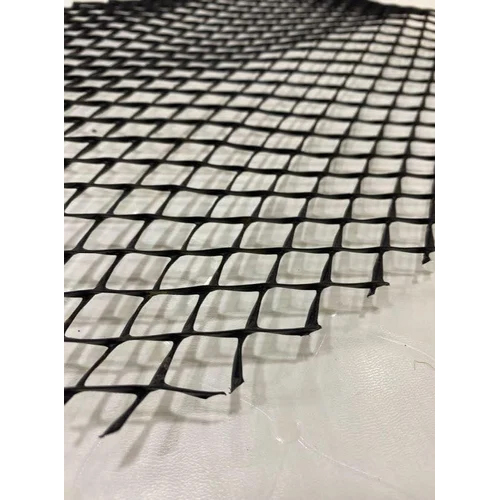
Tell us about your requirement

Price:
Quantity
Select Unit
- 50
- 100
- 200
- 250
- 500
- 1000+
Additional detail
Mobile number
Email

More Products in Drainage Geocomposite Category

PET Drainage Geocomposite
Price 500 INR / Meter
Minimum Order Quantity : 5000 Square Meters
Disposable : Yes
Georgette Style : Woven
Thickness : 6 mm
Color Detail : Solid Black

 Send Inquiry
Our Products
- Rockfall Protection
- Uniaxial And Biaxial Geogrids
- Non Woven Geo Bags
- Drainage Geocomposite
- Soil Erosion Controls
- Geocell Panel
- Geotextile Fabric
- Gabion Box
- Ocean Geogrid
- Slope Erosion Protection
- Polymeric Geostrap
- EPDM Pads
- HDPE Pond Liner
- Cavity Connector For Reinforced Soil Walls
- Anti Glare Barriers
- Coir Pith Powder
- Soil Anchors
- Reinforced Soil Solution


4th Floor, 443-444, Vipul Trade Center, Gurugram - 122018, Haryana, India

Mr Tapish Gautam
(Director)
Mobile :08045800514
 Send Inquiry
 Send SMS
Developed and Managed by Infocom Network Private Limited.
 English
 Spanish
 French
 German
 Italian
 Chinese (Simplified)
 Japanese
 Korean
 Arabic
 Portuguese